For years I made regular visits to the National Geographic Society’s headquarters on M Street in downtown Washington—for lectures, exhibits, and the photo lab where I had prints and slides made. When the campus closed in 2022 for a complete renovation, I missed it more than I expected. On June 27, I finally saw what four years and $300 million had produced.
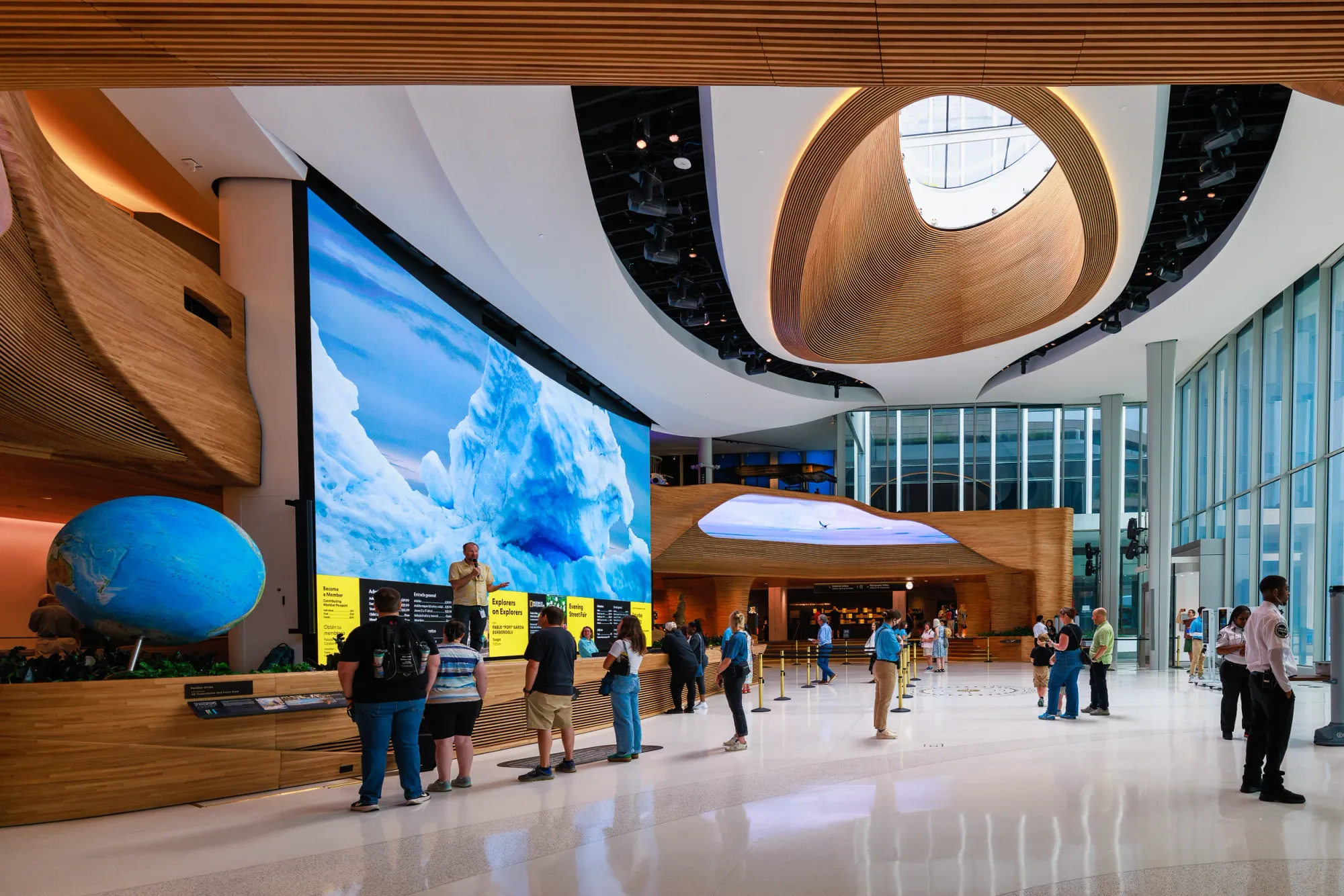
The scale of the transformation is hard to overstate. What had been about 20,000 square feet of traditional gallery space—the old Explorers Hall and its largely static displays—is now more than 100,000 square feet of exhibitions, theaters, and immersive experiences, the largest undertaking in the Society’s 137-year history. Rather than demolishing the existing Mid-century Modern buildings, the architects at Hickok Cole restored and repurposed them, recovering 95 percent of campus materials and incorporating sections of the original marble façade into the museum’s new entrance pavilion, framed by the familiar yellow border of the magazine cover.
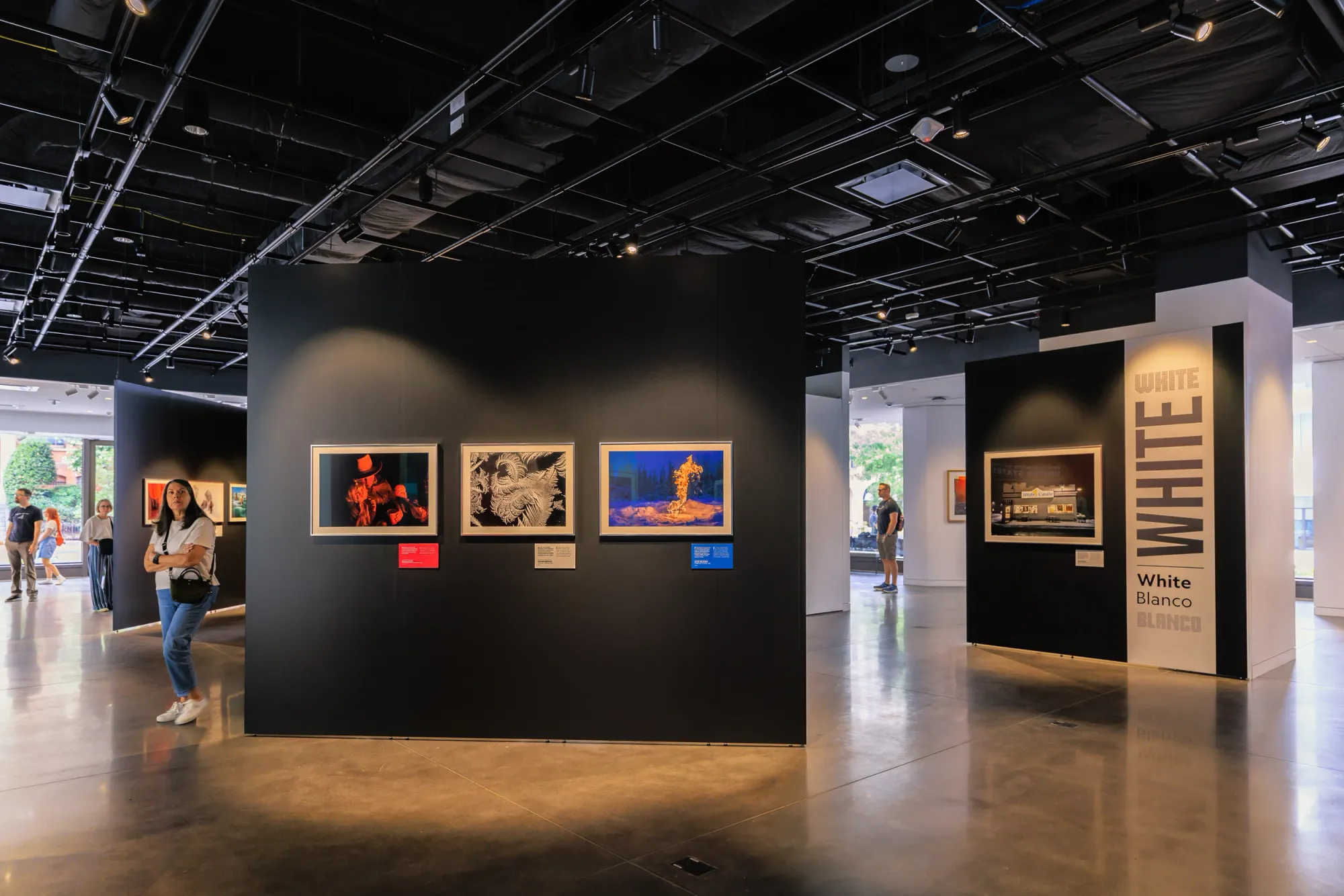
The photography galleries were what I came for, and they delivered. In Focus: Photographs of National Geographic presents a carefully curated selection of iconic images from the Society’s vast archive, reproduced at large scale. The exhibition spans the globe, while a dedicated section on the United States arranges photographs around the colors red, white, and blue. These are images many of us have seen in magazines, books, or online over the years. Seeing them this large—and printed this well—is an entirely different experience.
Speaking of printing, I learned that the magazine is still being produced, though it is no longer sold on newsstands. I subscribed on the spot. The print quality remains exactly as I remembered: exceptional.
I also spent time in an exhibit about filming the natural world, narrated by National Geographic photographer, mountaineer, and Academy Award-winning filmmaker Jimmy Chin. He reveals the extraordinary effort behind footage most of us take for granted. The patience, engineering, and physical endurance required to capture even a few seconds of usable film recalibrate the way you watch any nature documentary.
While I was there, a group of firefighters from Washington’s West End station came through. They looked genuinely excited and impressed, which felt like its own kind of endorsement. This isn’t a museum only for people who already love museums.
The museum is bilingual throughout, in English and Spanish, which felt right for an institution built on the idea that the world is larger than any one language or perspective.
Washington has no shortage of museums, but the National Geographic has always occupied a place of its own—popular without being populist, authoritative without being academic. Walking through the new building, I found myself remembering why I came here so often years ago. It wasn’t just for the exhibitions or the photo lab. It was because the National Geographic made the wider world feel a little closer. It’s good to have it back.