My mother’s brother settled in Nuremberg after the Second World War, and beginning in my college years I visited him and his family from time to time. During those visits I got to know Nuremberg and the surrounding towns, including Bamberg, Rothenburg, and the Black Forest. I explored on my own and, when my uncle was free, we ventured farther afield together.
Yet somehow, during all those visits, I never made it to the former Nazi Party Rally Grounds. I knew they were there, of course, but it seemed impolite to ask. I could have gone on my own, but for whatever reason, I didn’t.
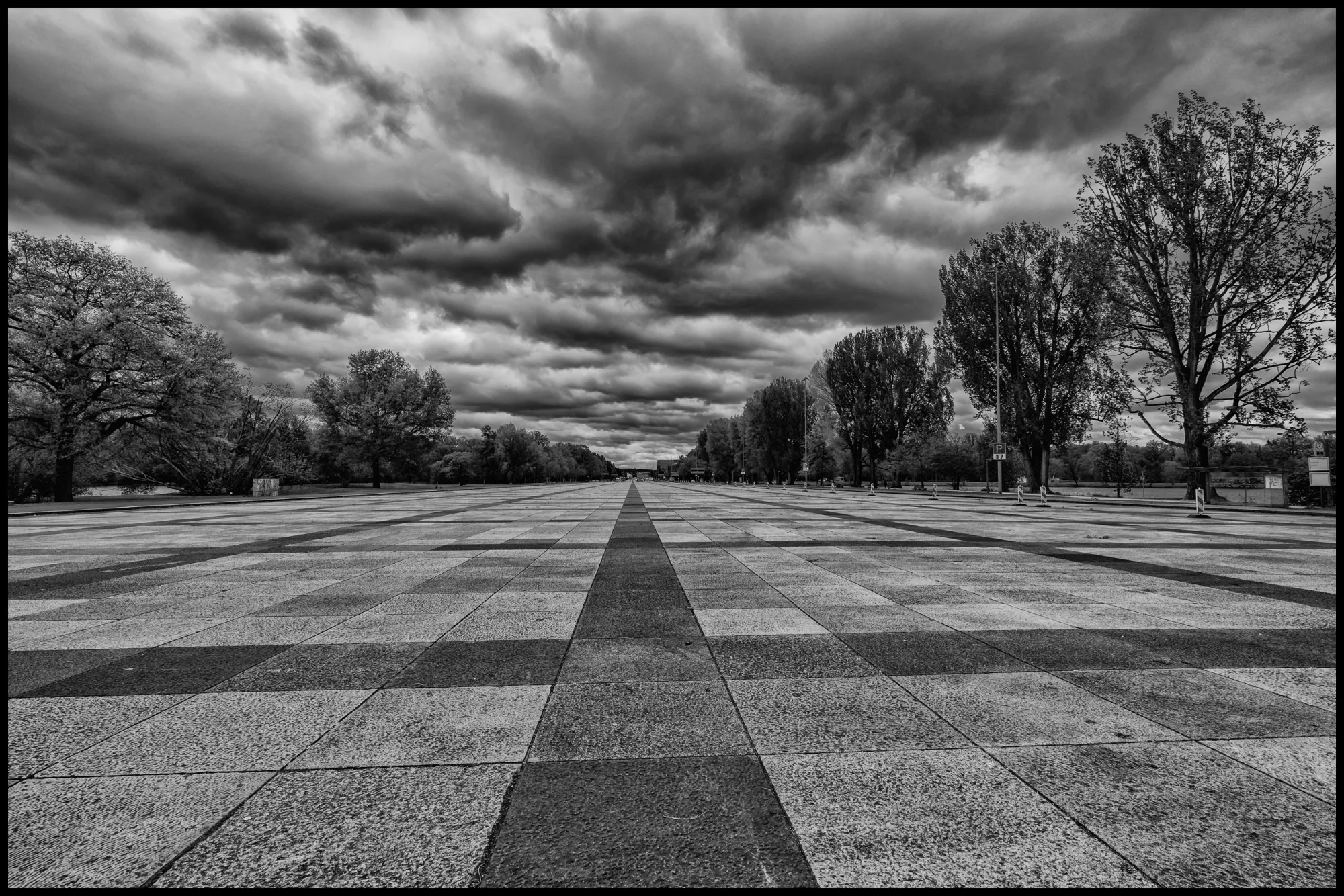
That changed in April 2024 on a cold and windy day. One of my cousins from Nuremberg, my uncle’s son, graciously served as my guide. The site felt stark, desolate, and impossibly vast, its scale resisting any attempt to capture it in photographs. Only a handful of visitors were there, but the immensity of the place chilled me. I tried to imagine the grounds filled with uniformed followers of Adolf Hitler, roaring in unison. The thought sent a shiver down my spine.
Standing there, it was impossible not to think about what had happened on this ground.
Between 1933 and 1938, Nazi Germany staged massive party rallies in Nuremberg. The former Nazi Party Rally Grounds remain the largest surviving complex of National Socialist architecture in Germany. Designed by Hitler’s architect, Albert Speer, the vast structures still convey the immense power of Nazi propaganda. Speer was later convicted of war crimes and crimes against humanity at the International Military Tribunal in Nuremberg. He served twenty years in prison and died in London in 1981.
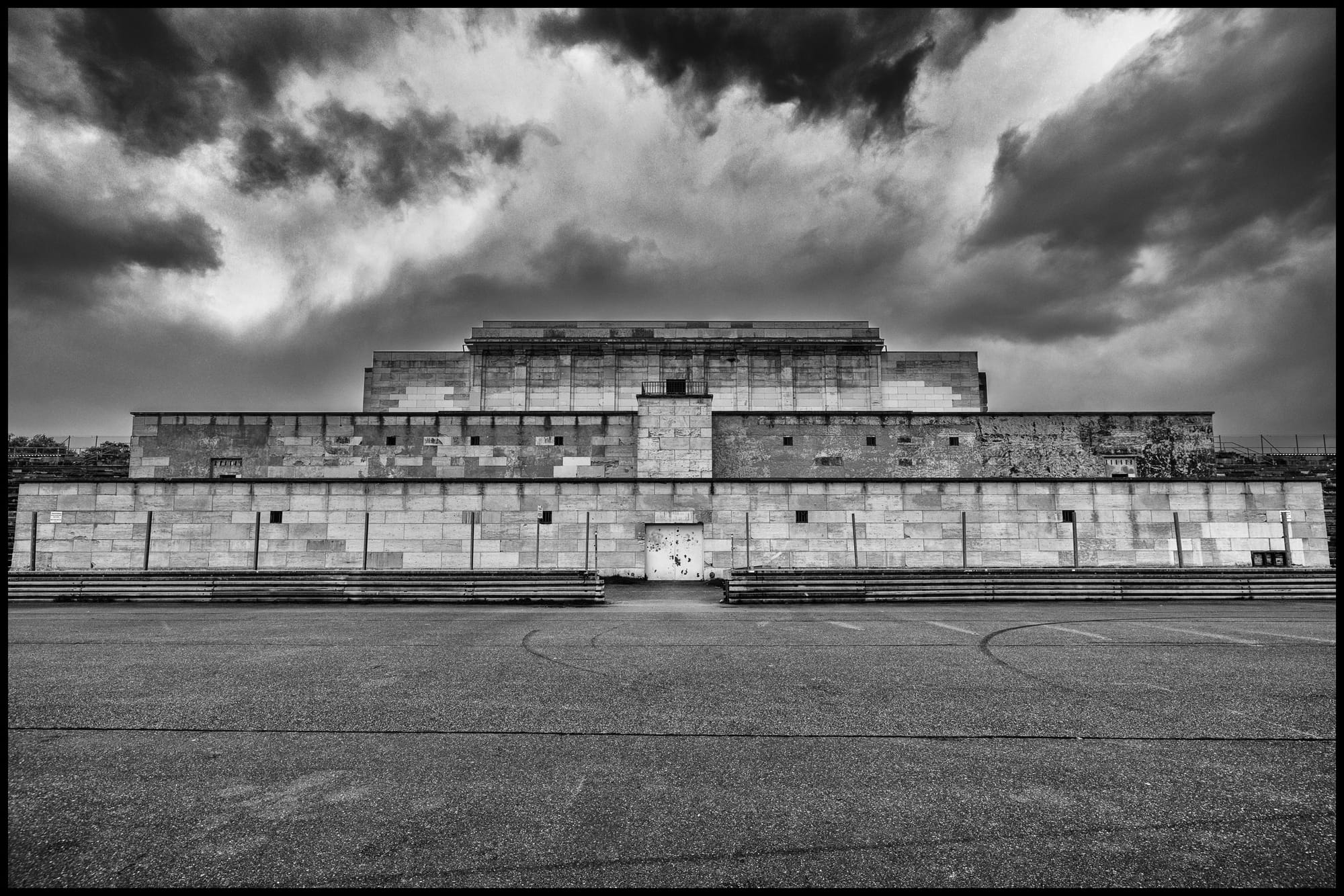
The Zeppelinfeld, shown above, is one of the most striking remains. Its massive grandstand, 360 meters wide, was modeled on the Pergamon Altar of ancient Greece, with square piers inspired by the work of architect Paul Philippe Cret. After Germany’s defeat in 1945, American forces famously blew the swastika from its top. The name “Zeppelinfeld” comes from the landing of Count Zeppelin’s airship on the site in 1909.
I’ve often thought about why I never visited the rally grounds during those earlier trips. Although my uncle was a proud Jew, he had chosen to build his life in Germany, and I sensed—whether correctly or not—that Nazi history was not a subject he particularly wanted to dwell on.
Or maybe I simply didn’t want to know what it would feel like to stand there.
Whatever the reason, it took until 2024—and my cousin’s company—for me to finally go.